



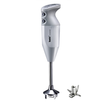
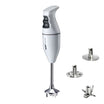
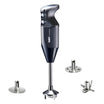
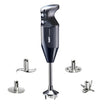



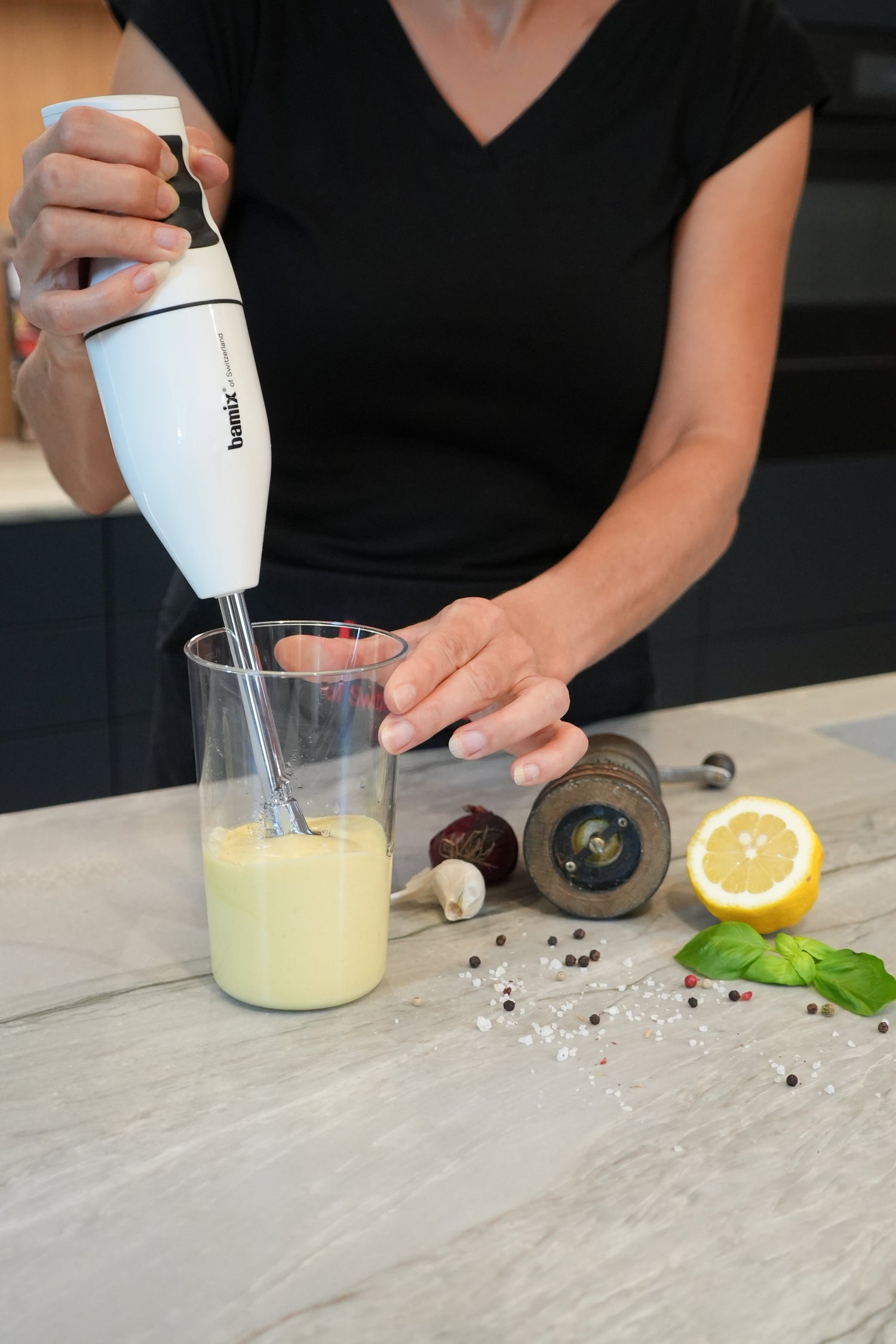
If you have ever stood in a kitchen store holding two boxes, a tall countertop blender and a slim immersion blender and wondered which one you actually need, you are asking the right question. Most kitchens do not need both. Most home cooks pick the wrong one. And most professional chefs, when they have to choose only one, pick the immersion blender, for reasons that have nothing to do with marketing.
This guide cuts through the noise. By the end of it you will know which tool fits your cooking, why it matters, and where bamix® fits in if you decide an immersion blender is the right call.
The short answer
A countertop blender is built for cold, large-volume liquid jobs. An immersion blender is built for hot, small-to-medium-volume jobs and for working directly inside the pot, jar, or beaker your food is already in. If you make smoothies in big batches every morning, get a countertop blender. If you cook real meals like soups, sauces, dressings, dips, mayonnaise, baby food, pesto, soft fruit purées get an immersion blender. If you do both, the immersion blender wins on flexibility, footprint, and cleanup.
What an immersion blender actually does better
It blends in the pot
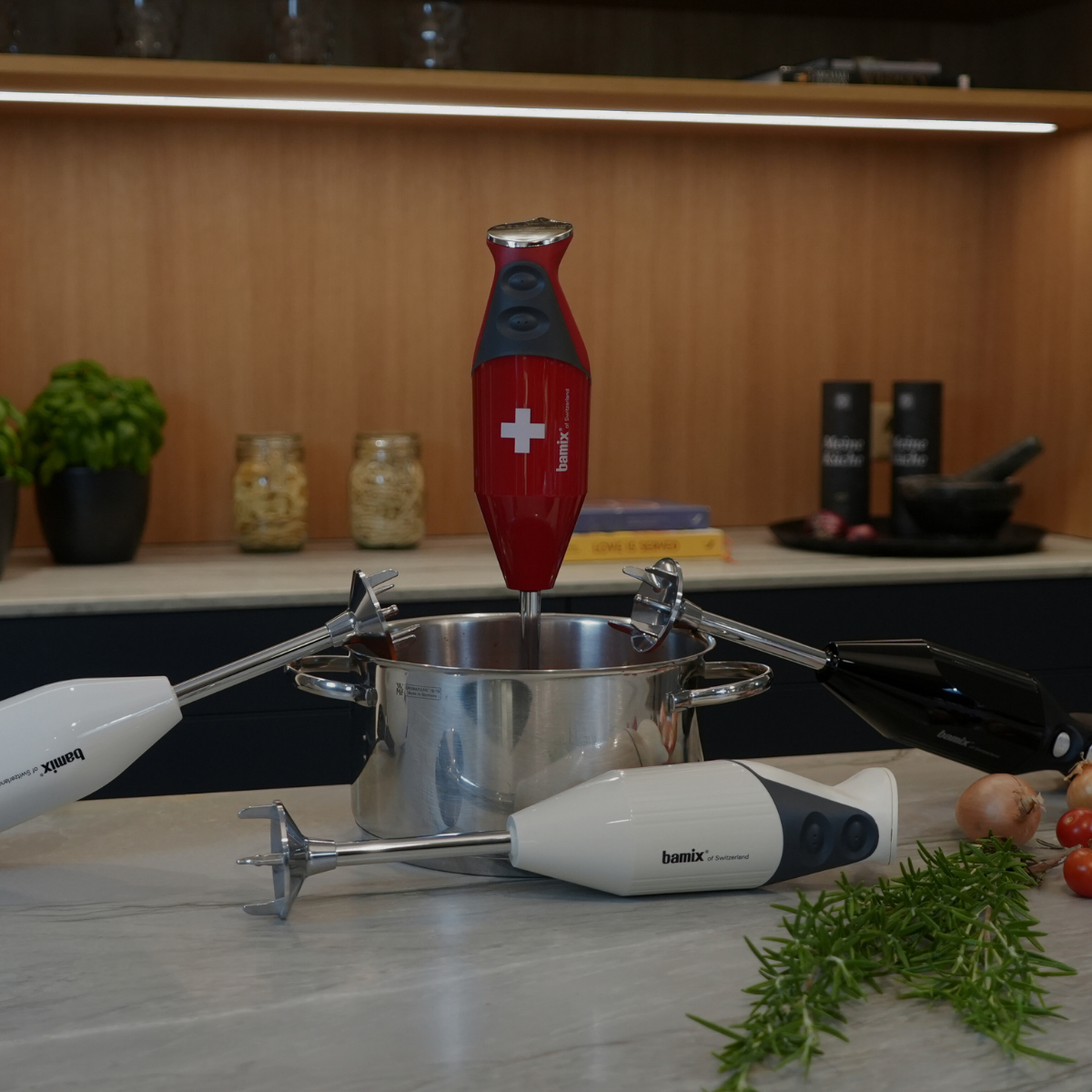
Pouring hot soup from a pot into a countertop blender is the single most-reported source of kitchen burns from blending. With an immersion blender you skip the transfer entirely. Plug it in, lower it into the pot, and you are done in under a minute.
It handles small batches
Countertop blenders need a minimum volume to actually circulate. Try blending half a cup of vinaigrette in a Vitamix and you will spend three minutes scraping the sides. An immersion blender works at any volume, even a single egg yolk for one portion of mayonnaise.
It cleans in seconds
A bamix® only needs a quick rinse under running water, there is nothing to disassemble. A countertop blender means a jug, a lid, a gasket, and a blade base, every single time.
It takes up almost no space
Counter space in a US kitchen is expensive. A bamix® hangs on a wall bracket or sits in a small stand. A countertop blender owns its corner of the counter forever.
Where the countertop blender still wins
Be honest about this, it matters for your decision.
- Frozen drinks and crushed ice in volume (think party-size margaritas)
- Very thick smoothies with frozen fruit and ice in 32+ oz batches
- Nut butters in large quantities
For these specific jobs, a high-power countertop unit is genuinely better. For almost everything else, an immersion blender does the same job faster and with less cleanup.
Side-by-side: the comparison most reviews skip
Cleanup time
Immersion blender: 10 seconds under the tap. Countertop blender: 2–3 minutes minimum. Over a year of daily cooking, this is hours of your life back.
Footprint
Immersion blender: stores in a drawer. Countertop blender: lives on the counter or gets shoved into a cabinet you never reach.
Versatility
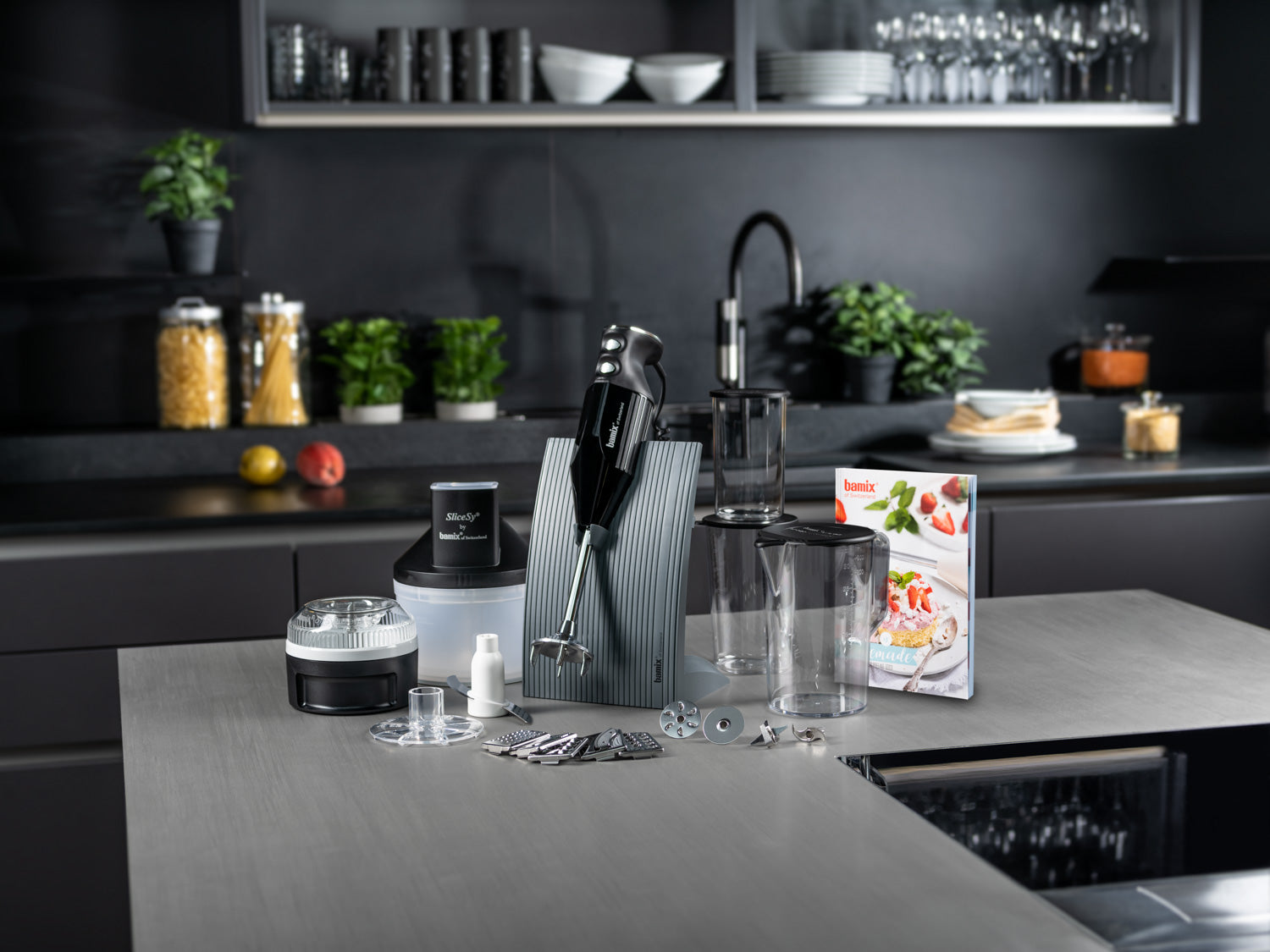
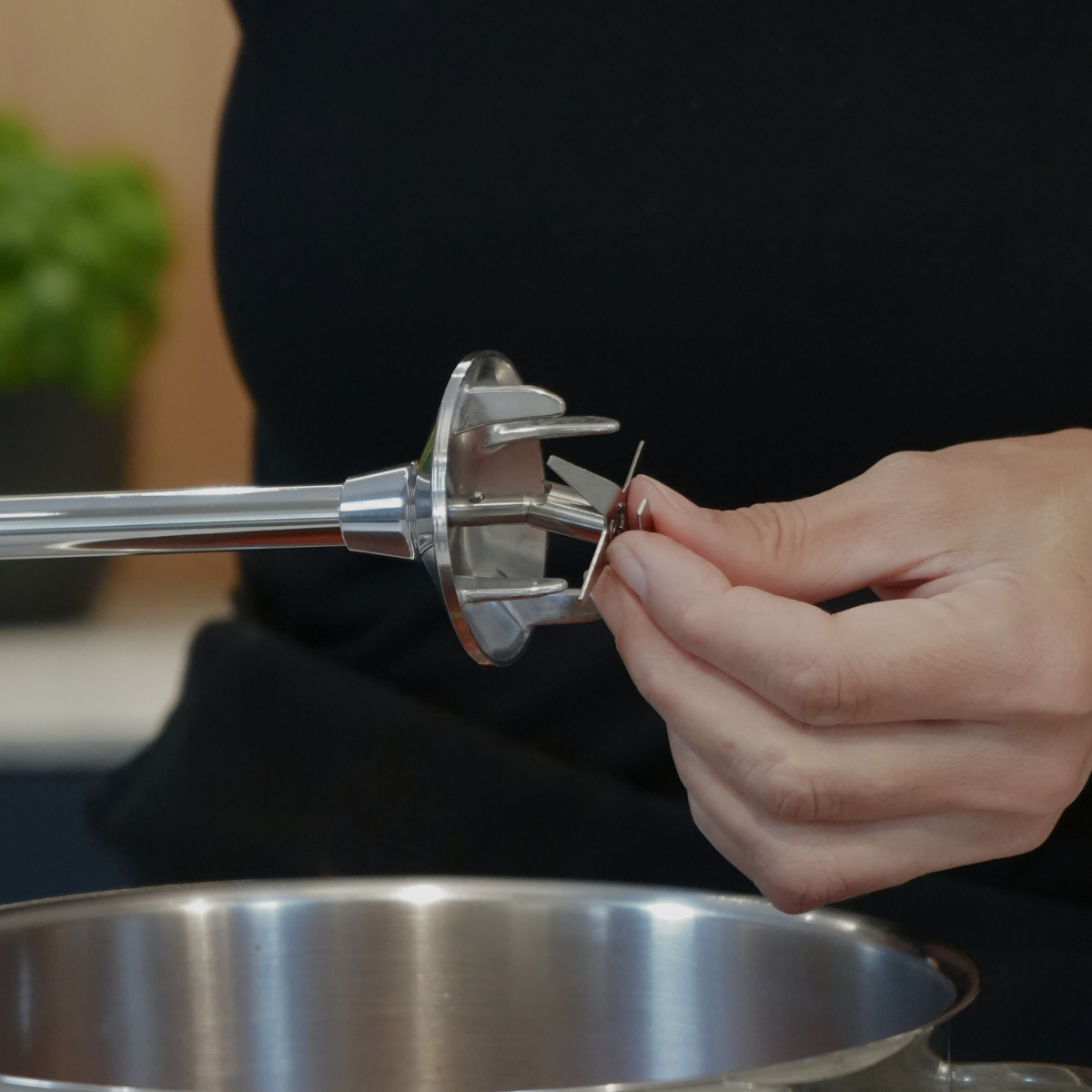
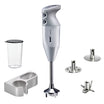
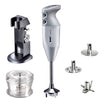
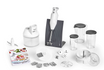
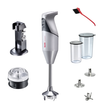
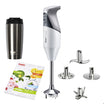
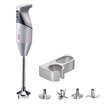
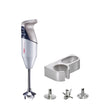
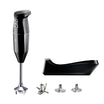
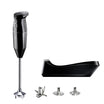
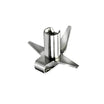
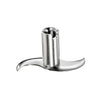
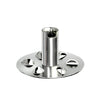
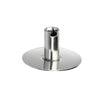
A bamix® with its four standard blades replaces an immersion blender, a whisk, a mini food processor, and a hand mixer. A countertop blender replaces only a countertop blender.
Durability
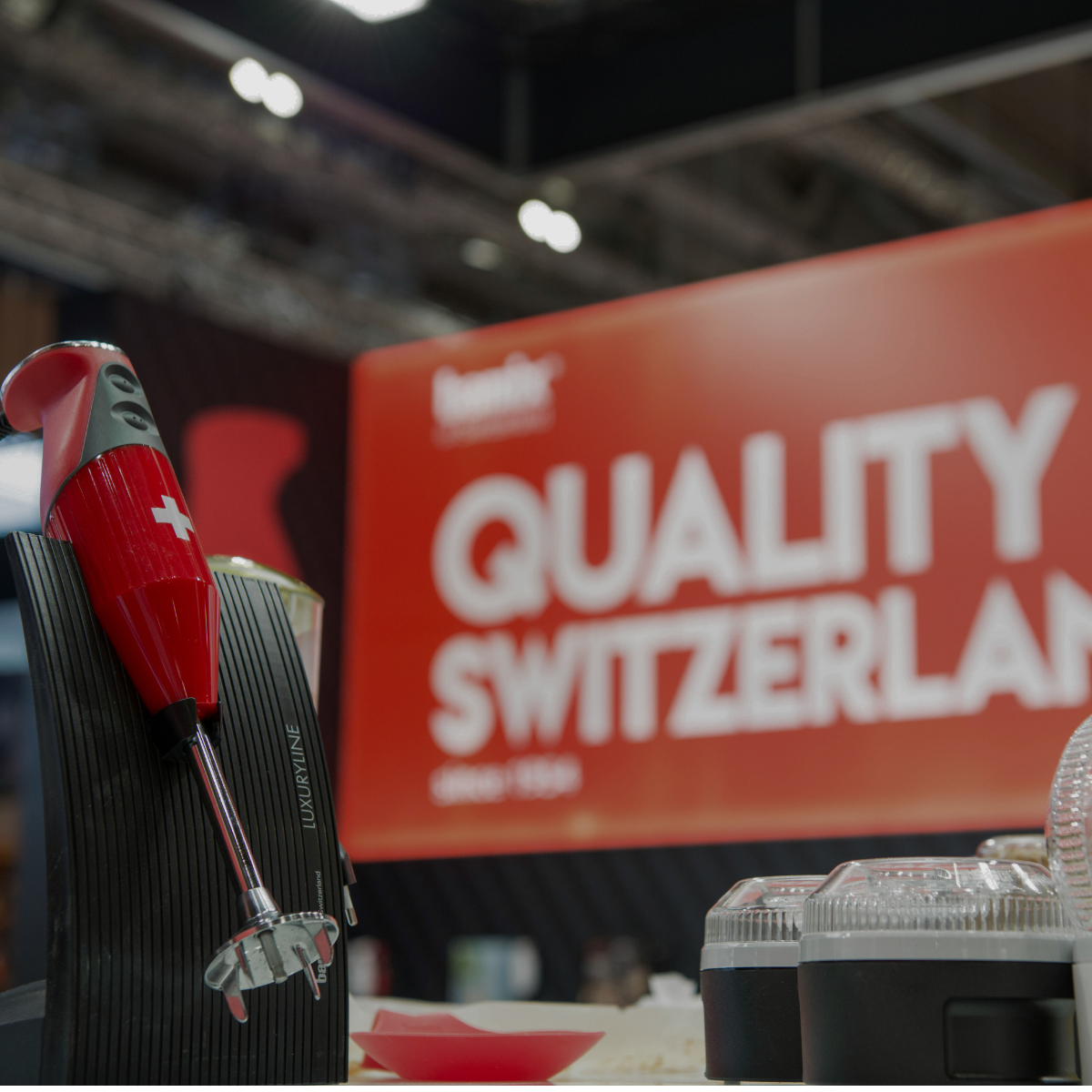
This is where bamix® separates from the rest of the immersion blender category. Most stick blenders last 2–3 years. A bamix® is built in Switzerland with a brass-coated motor and an over 60-year design lineage. The motor warranty on current models is for life. That is not marketing copy, it is on the product page.
What chefs actually use
Walk into any professional kitchen in New York, San Francisco, or Zurich. You will find at least one immersion blender on every line. You will find a Vitamix in maybe one out of three. The reason is simple: when you are emulsifying a sauce on the pass during service, you cannot stop to pour something into a jug. You blend it where it is.
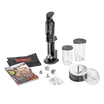
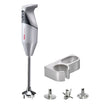
That is also why the bamix® Pro-2 is NSF-rated and shows up in Michelin-starred kitchens around the world. When the tool needs to work hundreds of times a day, a hot-pot-friendly immersion blender wins every time.
So which one should you buy?
Pick a countertop blender if smoothies and frozen drinks are 80% of your blending and you make them in large batches.
Pick an immersion blender if you actually cook, soups, sauces, dips, dressings, baby food, mayonnaise, soft purées, whipped cream, salad dressings. This is the larger group.
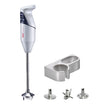
If you cook professionally or you cook the way professionals cook at home, look at the bamix® Pro-2. If you are starting out, the bamix® Classic gives you the same Swiss build at an entry price.
FAQ
Can an immersion blender replace a regular blender?
For most home cooking, yes. A bamix® with the multi-purpose blade and beaker handles smoothies, soups, sauces, and purées. The exception is large frozen-drink batches.
Are immersion blenders strong enough for thick soups?
A good one is the bamix® Pro-2 runs at 17,000 rpm and is rated for commercial kitchens, thick soups are exactly what it is designed for.
How long should an immersion blender last?
A cheap one lasts 2–3 years. A bamix® lasts decades, the company has been making the same engineering since 1954, and current corded models carry a lifetime motor warranty.

